


My struggles with GV handbrake and MOT.

Senior Member
Joined: Jan 2012
Posts: 1,611
From: UK

Bloody Hell mate! So we are stuck with having to have the gearbox lock up in "Park" in order to stop the bloody thing from rolling down hill and crashing into no 52! Not good to hear the "Clunch" when you take it out of gear and into drive! I wonder how much damage it's causing these 41TE boxes?...
SO... back to drawing board mate...
SO... back to drawing board mate...
- my point is if you cut out going down or up a
- more technically I buy the argument that you might not be able to apply the handbrick to a moving 2.7 ton van, but ;
- I don't buy the engineering that once its applied to a static wheels it should be able to pull away .. .. by simply putting it in drive
Vmaxxer, the leading / trailing shoe setup is designed to be more effective [greater braking force] when going backwards in a dual slave cylinder. Most of the world applies the handbrick when doing a hill start uphill - thus the bias in stopping us going backwards.

Senior Member
Joined: May 2014
Posts: 510
From: The Netherlands
When I put in my new brake shoes there was no difference between any of the 2 shoes. And looking at the way the mechanics work it looks to me there is an even force working on both shoes so theoretically the brake force should be equal rolling forward or backwards methinks

What am I missing?
Senior Member
Joined: Jan 2012
Posts: 1,611
From: UK
The fundamentals as I remember them. On duo-servo brakes the springs are of different tension. When the leading [primary] shoe is pushed into contact with the forward moving drum fiction causes it to move with the rotation [self wrapping action] slightly forcing the trailing [secondary] shoe into contact with the drum.
Duo-servo brakes, single servo, double acting on the left and right shoe with a floating adjuster at the bottom.
2LS, twin leading brake shoes, equal hydraulic pressure applied to both separate servo's top & bottom. Advantages are longer life, better cooling, improved resistance to fade. The disadvantage of 2LS is in reverse because both shoes become trailing shoes.
NOTE : Any much more knowledgeable people out there, feel free to correct me if I've got this wrong. My brain cells like the head they are in are very very old and inefficient - just like the antique engineering that is the Voyager drum in hat parking brake.
Duo-servo brakes, single servo, double acting on the left and right shoe with a floating adjuster at the bottom.
2LS, twin leading brake shoes, equal hydraulic pressure applied to both separate servo's top & bottom. Advantages are longer life, better cooling, improved resistance to fade. The disadvantage of 2LS is in reverse because both shoes become trailing shoes.
NOTE : Any much more knowledgeable people out there, feel free to correct me if I've got this wrong. My brain cells like the head they are in are very very old and inefficient - just like the antique engineering that is the Voyager drum in hat parking brake.

Thread Starter
|
Senior Member
Joined: Jul 2013
Posts: 885
All I can say is this --
For a major car manufacturer to come up with a hand or parking brake so poor as this one that it's pointless having it at all, means Chrysler in this instance are no better than Moskvitch or Trabant. One wonders how they got through the regulations with it.
If Chrysler value their reputation to even a minor degree they should do something about it. I suggest either the supply of very high friction brake shoes, or supplying a conversion kit to have pads operating on the rear discs/rotors hydraulically.
There you are Chrysler, you've had the constructive criticism. Now get off your backsides and sort it.
Leedsman.
For a major car manufacturer to come up with a hand or parking brake so poor as this one that it's pointless having it at all, means Chrysler in this instance are no better than Moskvitch or Trabant. One wonders how they got through the regulations with it.
If Chrysler value their reputation to even a minor degree they should do something about it. I suggest either the supply of very high friction brake shoes, or supplying a conversion kit to have pads operating on the rear discs/rotors hydraulically.
There you are Chrysler, you've had the constructive criticism. Now get off your backsides and sort it.
Leedsman.
Senior Member
Joined: Jan 2012
Posts: 1,611
From: UK
I wish an expert on brakes rather than a generalist like all of us here would have an input.
I do know that the DIH was widely adopted by all major manufacturers for sports and SUV weight vehicles all over the globe. Of course its biggest benefit that of a sturdy no corrosion design ~ is ~ precisely its biggest failing in implementation because Chrysler engineered their 'back plate' which was primered without being rust proofed first, and it has a hole big enough for British postbox left in it. So what should be a high forward backward braking coefficient [high resistance to rolling away] design clearly is not fit for purpose.
The issues with parking brakes on our vehicles seem to me to be (1) That 'letter box sized hole' I describe means that small parts set that should last several lifetimes are corroded beyond belief within just a couple of winters in the UK and need to be replaced. (2) Rollaway, a well documented [parking on a slope with hot brakes, brakes cool and contract, rollaway happens] and frequently catastrophic issue is not of itself an issue on these vehicles - only that rollaway certainly would happen 93) on any slope of any magnitude because the handbrick is unable to apply an arc of force in an outward radial motion to contact with the internal surface of the DIH. (4) Quite what is at play I've no idea, but somewhere between Leedsmans experiment with the 'clockspring clutch' on the handbrake lever and the applied pressure to the friction materials on the pads there is a major fault. It has always been accepted wisdom that the parking brake because it operates independently from the primary system's hydraulic circuit can also be used as an emergency brake to bring a vehicle to rest if the primary brake fails, wisdom as a word does not fit, as an emergency brake its an absolute laughing stock. So come on experts, why won't the parking brake arrangement work, what are we doing wrong ?
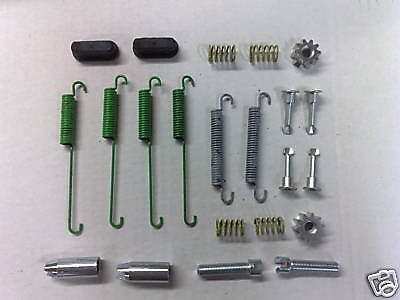
Small parts set
Smallest British PostBox
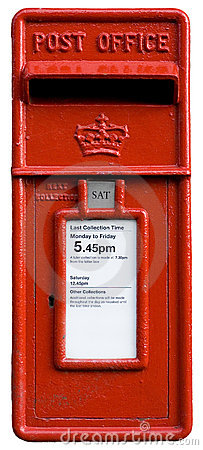
I do know that the DIH was widely adopted by all major manufacturers for sports and SUV weight vehicles all over the globe. Of course its biggest benefit that of a sturdy no corrosion design ~ is ~ precisely its biggest failing in implementation because Chrysler engineered their 'back plate' which was primered without being rust proofed first, and it has a hole big enough for British postbox left in it. So what should be a high forward backward braking coefficient [high resistance to rolling away] design clearly is not fit for purpose.
The issues with parking brakes on our vehicles seem to me to be (1) That 'letter box sized hole' I describe means that small parts set that should last several lifetimes are corroded beyond belief within just a couple of winters in the UK and need to be replaced. (2) Rollaway, a well documented [parking on a slope with hot brakes, brakes cool and contract, rollaway happens] and frequently catastrophic issue is not of itself an issue on these vehicles - only that rollaway certainly would happen 93) on any slope of any magnitude because the handbrick is unable to apply an arc of force in an outward radial motion to contact with the internal surface of the DIH. (4) Quite what is at play I've no idea, but somewhere between Leedsmans experiment with the 'clockspring clutch' on the handbrake lever and the applied pressure to the friction materials on the pads there is a major fault. It has always been accepted wisdom that the parking brake because it operates independently from the primary system's hydraulic circuit can also be used as an emergency brake to bring a vehicle to rest if the primary brake fails, wisdom as a word does not fit, as an emergency brake its an absolute laughing stock. So come on experts, why won't the parking brake arrangement work, what are we doing wrong ?
Small parts set
Smallest British PostBox
Senior Member
Joined: May 2014
Posts: 510
From: The Netherlands
When I opened the "drum in hat" to replace the handbrake shoes I was expecting loads of rust based on what I read here.
To my surprise it was kind of clean and I could use all small parts again without a problem. the parts where all still original 2002 I think..
I noticed that the "large hole" on the plate was carefully covered by a soft rubber plug, apparently keeping all moist and dirt out.
Isnt that part missing in your cat Qinteq?
To my surprise it was kind of clean and I could use all small parts again without a problem.
the parts where all still original 2002 I think..I noticed that the "large hole" on the plate was carefully covered by a soft rubber plug, apparently keeping all moist and dirt out.
Isnt that part missing in your cat Qinteq?

Senior Member
Joined: Apr 2013
Posts: 257
From: County Durham, UK
Mine wasn't the best either and it slowly got worse over the year, to the point of being useless. So I started at the back and worked forward. First thing was to strip out everything. Clean it all, but before reassembly, I de-glazed all of the braking surfaces with 500 grit wet-n-dry. I then discovered that one of the rear cables had popped out of the equalizer, just forward of the fuel tank. So with all done everything works fine now and it passed its MOT with ease. That said, it doesn't work as well as US models I've driven with the foot actuated parking brake. In fact I've never seen one over there with the hand operated lever which leads me to thing it was a modification for the European market.
Senior Member
Joined: Jan 2012
Posts: 1,611
From: UK
Mine wasn't the best either and it slowly got worse over the year, to the point of being useless. So I started at the back and worked forward. First thing was to strip out everything. Clean it all, but before reassembly, I de-glazed all of the braking surfaces with 500 grit wet-n-dry. I then discovered that one of the rear cables had popped out of the equalizer, just forward of the fuel tank. So with all done everything works fine now and it passed its MOT with ease. That said, it doesn't work as well as US models I've driven with the foot actuated parking brake. In fact I've never seen one over there with the hand operated lever which leads me to thing it was a modification for the European market.
- here 13th June this year :
The metal contraption is designed for American foot operated parking. Its declared purpose is that a mggga male with a big heavy clog can never over adjust. Essentially the clock spring automatically adjusts the park brake [removes the slack only from the cables] cable system, the self adjuster is designed to err on the side of never making the shoes bind on the inside wall of the in-hat drum. Clockspring and brake images here.
- the degree of arm pull on a handbrick is never going to equate to the degree of body weight push on a levered footbrick
- hence my claim that a perfectly workable [since the 50's] American engineering system does not translate to UK use
- I had this on a brookwood wagon and a ford station wagon 50+ years ago and they worked beautifully then an I suppose now
fffffffffffff

Thread
Thread Starter
Forum
Replies
Last Post
Leedsman
Chrysler Voyager & Town & Country
34
Dec 13, 2014 04:18 AM
Leedsman
Chrysler Voyager & Town & Country
10
Dec 4, 2014 02:47 PM
goggs
Chrysler Voyager & Town & Country
16
Nov 1, 2014 04:20 PM
nottmtrucker
Chrysler Voyager & Town & Country
10
Jun 23, 2013 07:05 PM
gareth111278
Chrysler Voyager & Town & Country
0
Nov 22, 2010 07:12 AM